




Do you work at Lockheed Martin?
Get expert insights from financial advisors who specialize in helping Lockheed Martin employees and executives make the most of their compensation package and benefits.
Looking for a financial advisor who specializes in working with Lockheed Martin employees? You’re in the right place. Below, you’ll find an advisor who understands Lockheed Martin benefits and compensation — along with his answers to common financial questions from Lockheed Martin employees and executives.
Whether you’re a new Lockheed Martin employee or you’ve advanced into a management or executive leadership role over a multi-year career, making smart decisions about your income and Lockheed Martin benefits can have a lasting impact on your financial future. For example:
✅ Do you know the right moves to get the greatest value from the Lockheed Martin benefits available to you?
✅ If you’re thinking about leaving Lockheed Martin for another job or planning to retire in a few years, are you taking the right steps today to receive all the compensation and benefits you’ve earned?
Please note, neither this article nor the advisor(s) featured are endorsed, affiliated or sponsored by Lockheed Martin in any way.
Key Takeaways
Overconcentration in Company Stock Is the Single Most Common Mistake
Joshua Brooks names overconcentration as the #1 mistake he sees, with emotional investing running a close second: employees know the company’s products and assume that knowledge translates into a sound position, without comparing it against their whole portfolio or risk tolerance. He points to net unrealized appreciation as a planning concept most Lockheed Martin employees have never heard of.
For Cleared Employees, a Disciplined Financial Plan Protects the Career Itself
Financial considerations are one of the adjudicative guidelines the government uses when granting and reviewing security clearances. That makes financial discipline a career issue for cleared Lockheed Martin professionals, not just a retirement one — and it sits alongside a second concentration problem, since paycheck, company stock, and industry health all trace back to the federal budget.
Military Retirees Joining Lockheed Martin Should Not Move the TSP First
Nothing forces a TSP decision on day one, and Joshua Brooks argues the rollover should be the last decision rather than the first. Capture the employer contribution, position your taxes now that salary stacks on top of retired pay, then give each account a mission — and only then decide where the money lives.
Why Lockheed Martin Employees Work with a Specialist Financial Advisor
Throughout the year, Lockheed Martin provides its employees and executives with updates about their benefits, ranging from health insurance and health savings accounts to retirement plans like a 401(k), a deferred compensation plan for executives, and equity awards such as restricted stock. Longtime employees may also have a frozen company pension earned under the old plan. While the company offers many useful resources and access to knowledgeable staff who can assist with questions, you’ll also find financial professionals not affiliated with Lockheed Martin who specialize in helping Lockheed Martin employees make the most of their income and benefits.
Whether you work at the Bethesda, Maryland headquarters, the Aeronautics operations in Fort Worth, Texas, the Marietta, Georgia plant, Skunk Works in Palmdale, California, Missiles and Fire Control in Orlando, Florida, a Space site in Colorado, another office location around the country, or remotely from home, you may have questions about your compensation package and benefits better suited for a financial professional who can offer unbiased advice and guidance.
Sensitive topics — like the steps you should take before quitting your job at Lockheed Martin to work elsewhere, protecting yourself in advance of a corporate layoff, or deciding when you should plan to retire — are all conversations that may be more comfortable with a trusted financial advisor.
Should You Hire a Lockheed Martin Specialist or a Local Financial Advisor?
You’ll likely find dozens of nearby financial advisors well-suited to help you reach your money goals with a personalized plan. But it can be harder to find a financial advisor who specializes in serving Lockheed Martin employees. Fortunately, many financial advisors offer virtual services, so you can meet online no matter where you (or they) live — which means you can hire a specialist financial advisor who lives hundreds of miles away if their knowledge and experience working with Lockheed Martin employees is the better fit for your unique needs.
💡 In the Q&A below, you’ll gain insights from a financial advisor who works with Lockheed Martin employees to help them make smart decisions, get the most value from their compensation and benefits, reduce their money stress, and prepare for a comfortable retirement.
🙋♀️ Have a question not yet answered? Use the form below to submit it anonymously and watch this article for updates with answers to your questions. You can also reach out to the financial advisor below to set up an introductory call or contact him with your questions by email.
Q&A: Financial Planning Tips for Lockheed Martin Employees & Executives
In this section, you’ll learn how you can make the most of your Lockheed Martin employee benefits and gain valuable tips from a financial advisor who specializes in working with Lockheed Martin employees and executives.
Financial Advisor Q&A · Lockheed Martin Employees & Executives
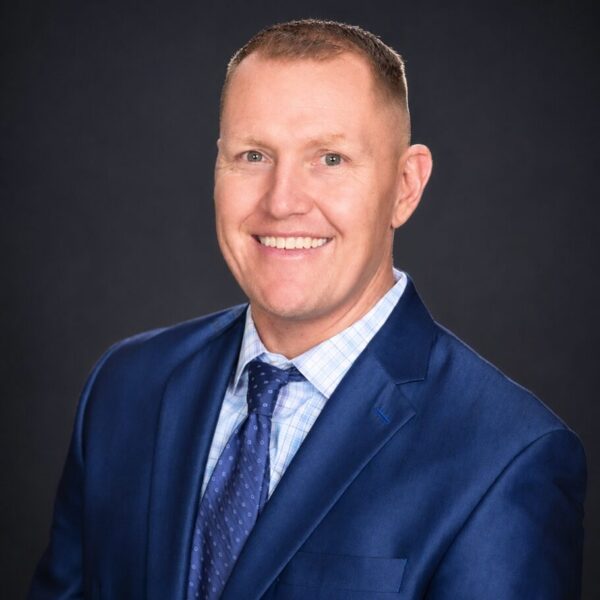
Joshua Brooks, CFP®
Exponential Advisors · Weatherford, TX · Serves clients nationwide
Financial planning for military retirees and cleared professionals in the defense industryJoshua Brooks is a financial advisor and Army Reserve chaplain based in Weatherford, Texas, serving clients nationwide. He works with military retirees, transitioning senior leaders, and cleared professionals entering the defense industry — helping them coordinate military retired pay, the TSP, and Lockheed Martin benefits into a single plan.
QWhen you first speak with a Lockheed Martin employee, what questions do you like to ask to better understand their unique circumstances and determine how you can best help them achieve their goals?
I try to talk as little as possible in a first conversation. A doctor asks before diagnosing. Same principle.
The questions I ask a military retiree: What is your biggest financial challenge right now? Where do you hope to be in three to five years? What do you do for fun?
Then the military ledger. Is your TSP all pretax, or did you contribute to the Roth side? What does your retired pay look like? What is your VA disability rating? I know that is personal, but it drives real planning decisions. What did you elect on SBP, and who depends on it? What is your clearance status?
Then the household. Does your spouse work? What does the family picture look like? How do you feel about paying for the kids’ college? What estate planning have you actually completed, not just researched?
And finally: how do you feel about your financial plan? Not the spreadsheet. The feeling.
Here is why I ask. Coordination is the most valuable part of a financial plan. Competence is the most important part of executing it. Empathy and understanding are the most important parts of the relationship between a client and an advisor. The answers tell me whether the pieces of your financial life were coordinated on purpose or are just individually reasonable. Those are different things, and the difference is where the damage hides.
QIs there a particular benefit available to Lockheed Martin employees you feel isn’t as well utilized or understood by employees as it should be?
I don’t think any benefit at Lockheed Martin is underutilized compared with the others.
However, I think it’s important to reframe the conversation around the quality of the company’s benefit stack. Smaller companies, generally, don’t possess the resources to offer a comprehensive set of benefits the way that larger firms can.
Therefore, the fact that employees are automatically enrolled at hire and matching contributions automatically and immediately vest shows Lockheed Martin’s commitment to providing a quality employee experience.
These things are helpful to understand because they aren’t required of the company; you could call them enhanced benefits or an incentive to work at and remain at the company. The company match is a layup that most people understand. In certain circumstances, people don’t contribute because they’re prioritizing other objectives.
Retiring from Lockheed Martin?
Get Before Your Last Day, a free printable Decision Map for sequencing your pension, 401(k), insurance, HSA, Social Security, and taxes.
QFor Lockheed Martin employees thinking about leaving the company to accept a job elsewhere, what actions do you recommend they take before resigning and shortly thereafter?
Review their employment contract and benefits. The grass isn’t always greener on the other side. Many people are quick to take the first or second job offer because it provides comfort and security, then they get locked into that organizational culture.
In real estate, it’s location, location, location. At work, it’s culture, culture, culture. Culture wins hands down. Now you still have to earn a decent paycheck, but if you’re fighting with your boss or coworkers, how helpful is that? Salary matters, but so do PTO, attitudes, values, the overall benefits package, location, and executive leadership.
I also recommend consulting with Human Resources if a manager or supervisor doesn’t align with how you want to be treated or exhibits counterproductive leadership tendencies.
QFor Lockheed Martin employees who have managed their finances on their own to this point, what would you suggest they consider to help them decide if they should begin working with a financial advisor at this stage in their lives?
Some people should keep managing their own money. I have told prospective clients exactly that.
Picture a senior officer, a composite of people I have met, not a client. Spreadsheet pro. Rental properties handled. Estate documents signed. Steady temperament. Stable home life. He does not need me, and I would say so to his face. Managing your own money for twenty years with solid results means you did something right. You read the right books. Bogleheads, The Intelligent Investor, A Random Walk Down Wall Street. No shade. You are a rare breed.
So when does managing it alone stop being enough?
When you are not diversified. A good ten-year run is not a strategy. There is no free lunch, and very few professionals outperform the market over long periods, let alone the rest of us.
When you are constantly trading. Investor behavior, not investment selection, is where most self-managed plans bleed.
When investments are the only thing you manage. Investment management is one horse in the show. Insurance, tax, retirement income, and estate planning are the others, and coordination among them is where a plan earns its keep.
And when someone else would inherit the plan. If your spouse would be handed a spreadsheet and a filing cabinet, that is not a plan. That is homework for a grieving person.
Not everyone needs an advisor. Many people need an advisor. Which one are you?
QWhat questions do you recommend Lockheed Martin employees ask financial advisors they’re considering hiring to help them decide if they’re a good fit?
Ask these questions of any advisor you are considering. Then watch how they answer. Some will be calm and explain. Some will hem and haw around the bush. That tells you plenty.
How do you get paid, and by whom? I am a fee-only financial planner. My clients pay me directly, and no one else does. Fee-only does not eliminate every conflict of interest, but it removes the most common ones, and I disclose the rest in writing in my Form ADV.
Are you a fiduciary at all times, in writing? I am.
Where is my money held? Your assets should sit at a third-party custodian, in your own name. Mine custody at Altruist. An advisor who resists this question is telling you something.
What credentials do you hold? I earned the CFP® certification in 2020. Ask what the letters after any advisor’s name actually require.
Who is your typical client? Mine are military retirees and transitioning senior leaders. Some want a full plan with investment management. Some want planning only. If an advisor cannot describe a typical client, you may be about to become whatever walks in the door.
And read the Form ADV before you sign anything. It is free, public, and where the honest answers live.
QGiven that many Lockheed Martin roles require active security clearances and are tied to long-term government contracts, how does that unique career and employment stability profile shape the financial planning conversations you have with Lockheed Martin clients?
The stability is real, but it is concentrated.
Lockheed Martin is an extraordinary company, and defense work provides steady income and strong benefits. But your paycheck, any company stock you hold, and the health of your whole industry ride on one customer: the federal budget. Budget fights, continuing resolutions, and contract cycles are facts of life in this industry. You already know this better than most.
So two things shape the conversation.
First, structure. Hold enough cash to ride out a contract cycle without touching long-term money. And do not let company stock pile up unmonitored on top of a company paycheck. That is not diversification. That is keeping your eggs, your basket, and your grocery store in the same building.
Second, the clearance itself. Financial considerations are one of the adjudicative guidelines the government uses when it grants and reviews security clearances. For a cleared professional, a disciplined financial plan is not just about retirement. It protects the career that funds the retirement.
I have spent 22 years in the Army, first in the Infantry and now as a chaplain, with combat deployments in between. I serve military retirees, transitioning senior leaders, and professionals entering the defense industry. I tell them all the same thing: stability you haven’t stress-tested isn’t stability. It is an assumption.
QHow do you advise Lockheed Martin employees on evaluating and maximizing their equity compensation, including performance stock units and other long-term incentive awards, while managing concentration risk and the tax implications of vesting events?
The #1 mistake, hands down, is overconcentration. The #2 mistake is associated with #1: emotional investing. They feel like they know the company, its products, services, and widgets, but they’re not comparing the business to the total universe of investable assets, their portfolio composition, or their risk tolerance. Emotions are helpful tools and very powerful, but they can interfere with sound investing outcomes.
I want my clients to understand that risk tolerance is not necessarily about the maximum amount of risk you’re willing to take, but the amount that helps you sleep well at night. Naturally, people become more conservative if they’re relying on their retirement nest egg and, say, Social Security benefits. If you start planning ahead of time, this becomes a non-issue because you’ve saved enough or have enough income sources to feel comfortable. That’s not the case for everybody.
I would tell them that we need to take a closer look. For example, many people haven’t heard of Net Unrealized Appreciation. This is an advanced financial planning concept. Once you explain it, the lightbulb goes on.
Just schedule a brief conversation to talk it over with a professional. If you were doing a major landscaping project, air conditioning repair, or automotive maintenance, it’s not worth it to try to do it on your own.
QFor military retirees joining Lockheed Martin, how should they handle their TSP and military retirement benefits alongside the new Lockheed Martin 401(k)?
BLUF: Evaluate your options as ruthlessly and as strategically as possible, and know that nothing forces a TSP decision on day one. Moving money should be the last decision you make, not the first.
Here is something worth knowing up front. Most advisors get paid when you transfer assets to their custodian. That is not a bad thing. Professional advice can be worth every penny. But it means anyone urging you to move your TSP quickly has an interest you should understand. Just like you would purchase a luxury sports car, a high-end appliance, or a riding lawn mower, you do your research. Read the reviews. Ask trusted friends. The same standard applies to this decision: who can you trust?
The real problem is bigger than the rollover question. You just left one retirement system and joined another, and the two were never designed to talk to each other. Your pension, your TSP, and your new Lockheed Martin 401(k) each make sense on their own. Uncoordinated, they drift.
Four steps, in order of march.
First, capture the employer money. Contribute at least enough to receive the full company contribution in the new plan. Check your plan documents for the current match structure.
Second, position your taxes. Your salary now stacks on top of a pension, and that combination usually puts you in a different bracket than you had in uniform. That changes the Roth-versus-pretax math. This is tax positioning, and it deserves a deliberate decision, not a default box-check.
Third, give each account a mission. The TSP is a solid vehicle, but you still have to drive it. It is low cost, it is simple, and the G Fund exists nowhere else. The new 401(k) is where your ongoing contributions and employer money land. Decide what each account is for before deciding where each account lives.
Fourth, and only now, the location decision. Leaving the TSP alone, consolidating into the 401(k), or rolling to an IRA each carries tradeoffs: costs, investment options, creditor protection, withdrawal rules, and what you give up when you leave. Consolidation is a choice, not a default.
Keep in mind: every employer plan has its own rules and procedures. Plan provisions vary by employee group and plan year, and TSP and tax rules change. Verify against current plan documents before acting. Every situation is different.
I am an Army Reserve chaplain, CFP® professional, husband, and father of four boys. As a fiduciary, I am required to act in your best interest, and I built my firm to do so.
Considering a financial advisor who specializes in working with Lockheed Martin Employees & Executives?
This material is for general educational purposes and is not individualized investment, tax, legal, or benefits advice. Lockheed Martin plan provisions vary by employee group, hire date, and plan year; TSP, tax, and VA rules change. Review current plan documents and official sources and consult qualified professionals about your circumstances. Exponential Advisors LLC is a Texas-registered investment adviser. Exponential Advisors LLC is not affiliated with or endorsed by Lockheed Martin or Wealthtender.
Quick Facts & Resources for Lockheed Martin Employees
| Lockheed Martin Quick Facts & Resources | Details / Useful Links |
|---|---|
| Lockheed Martin Corporate Headquarters Address | 6801 Rockledge Dr, Bethesda, MD 20817 (📍 Google Maps) |
| Overview of Lockheed Martin Benefits | Visit LockheedMartinJobs.com/Working-Here |
| How much do Lockheed Martin employees make? | View Lockheed Martin Salary Research on Glassdoor |
| Where can I learn more about careers at Lockheed Martin? | Visit LockheedMartinJobs.com |
| How many people work for Lockheed Martin? | Lockheed Martin has approximately 121,000 employees in the United States and internationally (Source: Lockheed Martin) |
| What is the ticker symbol for Lockheed Martin stock? | The Lockheed Martin ticker symbol is LMT. |
Ask a Financial Advisor Your Lockheed Martin Benefits & Career Questions
Are you ready to enjoy life more with less money stress?
Sign up to receive weekly insights from Wealthtender with useful money tips and fresh ideas to help you achieve your financial goals.





About the Author

Brian Thorp
Founder & CEO, Wealthtender · Editor-in-Chief
Brian Thorp is the founder and CEO of Wealthtender and serves as Editor-in-Chief. With over 25 years in the financial services industry — including nearly 22 years at Invesco, where he led strategic partnerships with wealth management firms representing more than $100 billion in assets — Brian founded Wealthtender to help people find financial advisors they can trust and make more informed money decisions.
A member of the National Society of Compliance Professionals and its SEC Marketing Rule Working Group, Brian was recognized by WealthManagement.com as one of its “Ten to Watch in 2024” for his work reshaping how financial advisors market their services. He holds a B.B.A. in Finance from The University of Texas at Austin.
Brian and his wife live in Austin, Texas.