



Wealthtender is a trusted, independent financial directory and educational resource governed by our strict Editorial Policy, Integrity Standards, and Terms of Use. While we receive compensation from featured professionals (a natural conflict of interest), we always operate with integrity and transparency to earn your trust. Wealthtender is not a client of these providers. ➡️ Find a Local Advisor | 🎯 Find a Specialist Advisor

[Asset and wealth managers are operating in one of the most demanding environments the financial industry has faced in decades. Margin pressure, scale imperatives, fee compression, AI-driven disruption, talent shifts, and rising client expectations are all converging at the same time.
Yet despite increasing complexity, distribution/sales teams are still often supported by fragmented training programs, disconnected tools, and episodic coaching initiatives. Firms are investing in activity — but not always building durable capability.
To explore what a modern professional development system should look like, we spoke with Mark Spina, Founder and Managing Partner at AlphaScale, and Tina Singh, founder of The GrowthStack.ai. The firms partner to build intelligence-led development systems that strengthen readiness, execution, and measurable business performance for asset and wealth managers.
The AlphaScale team uniquely combines former asset management distribution leaders with deeply experienced coaches who routinely work with financial advisors. That combination — understanding both the internal pressures of asset managers and the real-world expectations of advisors — informs how their professional development system is designed and reinforced.]
Hortz: What are the key challenges asset managers face in strengthening distribution performance today?
Spina: Through our experience leading asset manager distribution teams and now working alongside firms across channels and geographies, we consistently see three critical gaps limiting growth:
Competency – Inconsistent product fluency and narrative alignment. Reps may know features and benefits, but struggle to articulate portfolio role, thematic positioning, and risk framing with clarity and consistency. Narrative drift quietly erodes credibility.
Skills – Wholesalers often struggle to translate product knowledge into consultative, differentiated conversations. Discovery depth, objection navigation, and next-step clarity vary significantly across teams.
Measurement – Leadership lacks visibility into who is truly improving and what is actually working. Traditional training metrics measure attendance and completion — not readiness, judgment, or execution quality.
These gaps create invisible friction. Conversations appear active, but readiness and consistency are uneven. Mispositioning risk increases. Engagement suffers.
Hortz: How did you turn these observations into a professional development system?
Spina: We saw that most firms attempt to solve these issues through disconnected initiatives — a training here, a coaching session there, perhaps a new technology layered in. The result is activity without durable performance change.
High-performing asset managers, however, systematize their approach. They tie development to outcomes. They reinforce consistent messaging across teams. They create visibility into readiness. They build structured reinforcement loops.
Singh: Drawing on our experience leading distribution teams — and on our daily work coaching financial advisors — we helped design the AlphaScale Professional Development System to also reflect both sides of the conversation.
Asset managers need alignment, clarity, and measurable performance. Advisors expect relevance, context, and practical value. The system bridges those realities.
Hortz: What are the key components of the AlphaScale Professional Development System?
Spina: The system operates through three integrated pillars:
Activation (Product Intelligence) – Readiness on products, themes, and firm positioning.
Activation ensures that teams are prepared before they engage advisors. Through structured Product Intelligence, we evaluate and elevate readiness across product knowledge, market context, portfolio role, risk framing, and narrative discipline. This is not passive training. It is a progressive, gated development that measures applied understanding and aligns teams around the firm’s vision, outlook, and products.
Optimization (Sales Intelligence) – Intelligence and feedback on how readiness translates into sales and retention outcomes.
Optimization focuses on execution quality in real advisor conversations. Our Sales Intelligence layer evaluates how effectively teams structure conversations, conduct discovery, handle objections, and move toward clear next steps. Rather than relying solely on CRM activity metrics, we provide structured insight into execution patterns and coaching signals — without requiring call recording. This transforms activity into actionable intelligence. Leaders can see where conversations are strong, where friction emerges, and where targeted reinforcement will drive results.
Acceleration (Coaching Insights) – Professional development propelled by experienced managers and coaches using system insights to address weaknesses and amplify strengths.
Acceleration is where our hybrid model becomes particularly powerful. Our team includes former asset management distribution leaders who understand coverage models, product launches, and internal alignment pressures — alongside experienced coaches who routinely work with financial advisors and understand how advisors think, decide, and evaluate ideas. Together, they interpret system outputs and translate them into applied reinforcement — scenario-based coaching, strategic messaging alignment, and leadership guidance. Insights do not sit in dashboards. They drive behavior change that resonates with advisors.
Together, Activation, Optimization, and Acceleration create an operating rhythm that strengthens readiness before the call, execution during it, and reinforcement after it.
Hortz: How exactly does this system improve business results?
Singh: The system works because it closes the loop between readiness, execution, and reinforcement — informed by real advisor expectations. Activation reduces mispositioning risk and ensures narrative consistency. Optimization strengthens sales execution quality and highlights where conversion or retention opportunities are being lost. Acceleration ensures that insights are acted upon quickly and in ways that resonate with how advisors actually engage.
Spina: Over time, asset management firms see:
-Stronger advisor engagement.
-More consistent messaging across regions and teams.
-Reduced narrative drift.
-Faster readiness across new products or themes.
-Clearer visibility into what drives sales performance.
The goal is measurable behavior change — not event-based training.
Hortz: How does AlphaScale differentiate itself from other enterprise coaching and enablement platforms?
Singh: Many platforms focus on conversation analytics or training delivery. We operate at the intersection of readiness and execution — specifically for asset management distribution teams:
- We do not rely on script adherence metrics.
- We do not measure training completion as a proxy for proficiency.
- We do not focus solely on deal inspection.
Instead, we evaluate:
- Whether your team is truly prepared to represent products.
- Whether narratives are applied consistently.
- Whether execution quality supports retention and growth.
- Where risk and opportunity signals are emerging.
Spina: And we reinforce those insights with practitioners who understand both asset manager realities and advisor expectations. That dual perspective is critical. Asset managers often optimize internally without fully accounting for how advisors interpret and respond. Our team operates on both sides of that equation.
The system is purpose-built for asset managers, combining intelligence infrastructure with real-world distribution and advisory expertise.
Hortz: What advice would you offer asset managers evaluating professional development investments?
Singh: Firms should ask these questions:
1. Does this initiative strengthen readiness before exposure to the market?
2. Does it improve execution quality in real advisor conversations?
3. Does it create leadership visibility into who is improving — and why?
And a fourth:
4. Is it informed by people who truly understand how advisors engage?
Spina: Sustainable organic growth requires more than activity. It requires an integrated, intelligence-led development system grounded in real distribution experience and reinforced by professionals who understand both sides of the advisor conversation. That is what we set out to build.
This article was originally published here and is republished on Wealthtender with permission.
About the Author
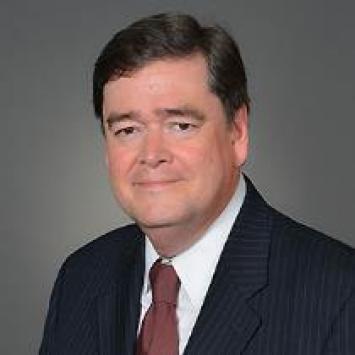
Bill Hortz
Founder Institute for Innovation Development
Wealthtender is a trusted, independent financial directory and educational resource governed by our strict Editorial Policy, Integrity Standards, and Terms of Use. While we receive compensation from featured professionals (a natural conflict of interest), we always operate with integrity and transparency to earn your trust. Wealthtender is not a client of these providers. ➡️ Find a Local Advisor | 🎯 Find a Specialist Advisor