



Wealthtender is a trusted, independent financial directory and educational resource governed by our strict Editorial Policy, Integrity Standards, and Terms of Use. While we receive compensation from featured professionals (a natural conflict of interest), we always operate with integrity and transparency to earn your trust. Wealthtender is not a client of these providers. ➡️ Find a Local Advisor | 🎯 Find a Specialist Advisor


[An active search for alternatives to traditional fixed-income investments for income and diversification hedging was triggered by the poor performance of 60/40 portfolios in 2022. This challenge has been instrumental in changing perceptions and use cases for different financial instruments – particularly options – as a valuable tool for shaping portfolio risk and return profiles. We see evidence of this in the large increase in assets attracted by option-powered ETFs (yield-oriented and Defined Outcome ETFs), which some have heralded as a derivatives renaissance.
This growth has been attributed to a large demographic shift of conservative and retirement investors looking for superior risk management and financial outcomes, and increased investor education changing the perception of options in retirement portfolios. These changing perceptions and operational innovations have prompted financial advisors and investment managers to further engineer options use in retirement portfolios. There has also been a marked evolution from typical, systematic option strategies to more active and sophisticated strategies that were once the domain of hedge funds.
To learn more about the expanded portfolio construction uses of options and option strategies in retirement accounts, we were introduced to Joe Rinaldi, President and CIO of Quantum Financial Advisors – a Rockville, MD-based financial advisory and money management firm serving high-net-worth individuals, business owners, retirement plans, and institutional clients. The firm utilizes its proprietary Delta Vega option trading model as a risk management overlay for client portfolios.
In addition, Mr. Rinaldi has taught a “Futures, Options, and Derivatives” class at the Smith School of Business at the University of Maryland; the Carey School of Business at Johns Hopkins University; the Stern School of Business at New York University; and internationally in Beijing, China. We asked him questions to better understand his differentiated perspectives on managing investment risk and rethinking retirement portfolio investing.]
Hortz: What aspects of traditional retirement investment advice did you see that needed to be challenged?
Rinaldi: Traditional retirement investment advice that centered on what I thought were lazy, “rule of thumb” mental shortcuts always concerned me. Examples included:
—Build your retirement portfolio around the percentage of bonds that mirrors your age. If you are seventy, you want 70% in less risky assets like bonds and 30% in stocks.
—The focus on stocks and a “long-term investing horizon” of accepting market volatility by riding it out, I felt, was just not going to cut it. I look back at the financial crisis and COVID, where you had blue chip stocks in a retirement account decline 40% or more. Those downturns can take a long time to make up.
—Accepting a “generic” 60/40 portfolio allocation based on historical market metrics.
You need to begin looking for additional strategies beyond traditional stock and bond investing by adding alternative investments and portfolio management strategies that generate extra alpha and provide some downside protection for retirees, like a strategic use of options methodologies. Dr. Howard Lodge, my partner at Quantum Financial Partners, and I decided to challenge these traditional ways of thinking about retirement accounts many years ago by developing our Delta-Vega options trading model, which is a core component of all our client accounts.
Hortz: How do you then define investment risk and risk management in retirement portfolios?
Rinaldi: First off, our core philosophy is that an investor’s portfolio risk management should be dictated by their specific financial needs, not by generic industry parameters or models. I take a very practical and client-focused stance by asking our retiring or retired clients to put together a cash flow pro forma over five, ten, or twenty years. It is like looking at themselves as a business.
We start with: How much cash flow do you need over 5–10 years in retirement based on your financial needs and planned retirement activities? How much are you making and/or what total assets do you have? That pro forma will tell you how much risk you should take. If you are “in the black” already by $50,000, you are sixty-five, and you are retired, why take a lot of risk? So, we are working backwards, if you will.
I will give you an example. We had a doctor who was sixty-nine and his wife, an attorney, sixty-one, together grossing about $500,000. He wanted to slow down because he is sixty-nine, and he did not want to perform surgery anymore. He stopped working, and the wife was concerned about maintaining their lifestyle because they were used to half a million dollars a year in cash flow. We helped them put together a pro forma that told them their cash flow needs, and we were able to show them how our investment process – with risk management and lower volatility – can comfortably earn them interest and dividends right now for both of them to retire. Besides being relieved, she also retired three months later, and their lifestyle has not changed. We would do the same with somebody with fewer assets. They, however, may have to work a little bit longer and put more of their assets into equities.
Everything starts with that cash flow pro forma, which would guide our portfolio construction and tell us how much risk they need to take given their retirement cash flow goals. We feel that is a better path than starting by building a “traditional” retirement portfolio based on historical risk/reward statistics. It more directly addresses the particular financial needs and emotional mindset of retirement clients and gives them a course of action that they can stick with.
Hortz: Can you further explain how you use options and apply your option strategy to retirement portfolios?
Rinaldi: Our Delta Vega options trading model is the cornerstone of what we do to mitigate risk and generate extra income, which is what everybody wants when they are in retirement. We learned through the financial crisis back in 2008 that there is no such thing as AAA. Both Fannie and Freddie were AAA, and they are still in conservatorship, which means they are effectively bankrupt to this day. This proves that traditional “safe” assets are not always safe. So, we need to primarily focus on proper asset allocation that includes alternative investments, and on generating extra alpha (income) by taking the volatility out of the stock market and getting paid in the form of dividends and option premiums into client accounts. Our options strategy adds return without adding exposure to equities.
As an illustration, let us say we would like the utility sector right now, which we do. We would sell “put” options to generate extra income on a utility stock with a dividend yield of about 4–4.5%. Selling a put contract structurally puts you in a position where you are going to purchase that stock at the guaranteed lower price level stated in the contract. By selling puts on desired stocks, an investor could get paid to wait to buy assets at a discount to their current market price. So, either way, you are getting a benefit. At option expiration (maturity), you can either sell another put option to generate more premium income, or you will be forced to buy the desired underlying stock at a lower price.
While we sell “puts” on utility stocks, conversely, we can sell “call” options on tech stocks, or any other stock that we believe has peaked. When you are up over 35% in one year and looking at P/E ratios that are kind of excessive, you may want to minimize your exposure to that highly volatile tech sector. By selling “calls” on overvalued stocks, an investor could get paid to sell assets at a higher price. We are generating hefty premiums because the volatility on these stocks is high. In essence, we are acting like an insurance company – getting paid to offer people an out on high-tech stocks. That is exactly what it is. I am collecting a premium from another market participant who was speculating that the price of the stock will increase.
To put this together, we are receiving an extra 3–7% every year with option premiums, regardless of where the underlying stocks go, either up or down in the portfolio. So, if we are earning 3% generically on dividends on stocks, you also have to add 3–7% on top for the option premiums as part of your income generation process. In context, an income of 9% is very attractive, and it is equal to the average return of the S&P since 1927. Hence, that is how we generate more income and take less risk on equities. Clients get paid to wait and buy things that we recommend buying at lower prices, and clients get paid to sell stocks that are expensive (i.e., they trade well above their intrinsic value). Throughout all this, we are always getting paid.
Our options strategy capitalizes on market volatility to consistently generate premium income for client portfolios. It does not mean we do not lose at times, when we get called away or get exercised. But most of the time, it is opportunity cost: selling a stock at the strike price and the stock continues to increase. Additionally, we are getting paid eight out of ten trades without the option being exercised, which is a great place to be – generating extra income and reducing that up-and-down movement in your portfolio. We are not speculators. We are positioned traders.
Hortz: Do many retirement planners use these types of options strategies?
Rinaldi: Many advisors have a hard time putting their arms around these option strategies because you sold a “put” on something in a retirement account that you do not have. But you can do that if you structure the retirement account a certain way. Most large brokerage firms do not allow the selling of puts in retirement accounts because they think you are speculating. But if you have the cash to buy the stock, you are not speculating. You are just going to buy it at a lower price than where it is trading today and getting paid for the privilege to do so at a later date.
There is a big differentiation in thinking and perspective regarding how you are looking at this investment activity. It is speculation from another vantage point, but I am clearly acting as a fiduciary and believe that options can be used conservatively as a “position trading” tool to generate significant income (approximately 3–7% annually) and reduce portfolio volatility, rather than for speculation. It is looking at market volatility as an asset, not as a risk to be feared, but as an opportunity to be harvested for income by “selling insurance” to other market participants through options.
While most other investment advisors I talk to might have a handful of clients with options agreements, almost all of my clients have options approval and active options trading happening through our embedded Delta Vega option strategy in their accounts.
Hortz: How does your portfolio construction and investment management process allow you to approach or beat market performance indices with a third to a half of the stock exposure recommended by most of the retirement industry? Can you walk me through how that is possible?
Rinaldi: Let us start with the fact that since 1927, the average return of the S&P has been a little over 9%, and this is used as our benchmark when we say we are looking for “equity-like returns”. Our equities allocation is between 30% and 50%, depending on the level of returns we are risk-managing for different client needs.
Another key component of our portfolio construction is a 20–30% allocation to private credit and private credit interval funds, which offer equity-like returns and bond-like, low volatility. So, we are meeting the average S&P return on 20–30% of the portfolio without direct equity exposure.
Furthermore, I am also selling puts on 25% to 50% of the portfolio (adding 3% to 7% income) and earning interest and dividends of 4.5–6.0% a year. In addition, we use a money market account where you can earn close to 4%. In summary, selling options plus interest and dividends (not including investment appreciation) offers our clients a target return of roughly 9% on their entire portfolio.
This combined approach allows portfolios to potentially achieve or exceed the historical average return of the S&P 500 with only half the typical equity exposure, leading to significantly smaller drawdowns during market stress events like the COVID-19 crash. Combining actively managed options with allocations to low-volatility, high-yield private credit could produce returns that meet or exceed the S&P 500’s historical average with much less risk.
Most importantly, the primary focus is on creating consistent and multiple streams of income through dividends, interest from private credit, and premiums from selling options. You do not have to rely on a high percentage of equities and accept market volatility. It is just a different perspective.
Hortz: How long have you been running this investment strategy, and how does it react to periods of market stress? What happens if we hit a prolonged sideways or bear market?
Rinaldi: I have been doing this for approximately 25 years. If you look at the COVID era, the market was down approximately 35%. Our clients were down anywhere from 2% to 10%, depending on how much risk they had – risk meaning the percentage allocated to equities. Performance during the financial crisis was similar, with performance down from 4–5% to 11–12%, again depending on the percentage allocated to equities.
You can see the benefit of this strategy. It minimizes your losses in a big way, and you can make up 3% in return through a couple of option trades. Can you make up 10%? Probably – just give me six to 12 months, not three to five years.
In a prolonged sideways market, I will perform well because, remember, I am selling puts and calls. I am generating approximately 3–7% in premiums. In a down market, I will potentially outperform all the time. In a flat-to-up market, I have outperformed. However, when the S&P is up around 13–15%, then client investment performance starts to drag. But again, if a client chases returns above 15%, then expect to invest money into private equity, but your money will be locked up for two to five years.
Hortz: As this retirement investment strategy challenges many traditional retirement industry teachings, any other thoughts you can share on how to apply or explain this differentiated retirement investment approach for client portfolios?
Rinaldi: Our overall investment strategy addresses many concerns for retirement investors. If clients are concerned about a potential equity selloff, our investment strategy will minimize their exposure to stocks, focus on prudent asset allocation, and overlay our Delta Vega option strategy on their portfolio, adding return without adding stock market risk.
Most importantly, this is not about timing the market or finding the next hot stock. It is not about either accepting volatility for growth or settling for stability with lower returns. It is about strategically positioning for equity-like performance without equity-level risk for more peace of mind.
This leads me to suggest that it is important for financial advisors and industry leaders to help demystify alternative strategies and more fully educate investors on the use of options for income and risk reduction, especially as a viable tool for conservative retirement investors. This could also lead to increased interest in alternative investments like private credit and a shift away from static, age-based asset allocation models toward more dynamic, cash-flow-driven approaches.
This article was originally published here and is republished on Wealthtender with permission.
About the Author
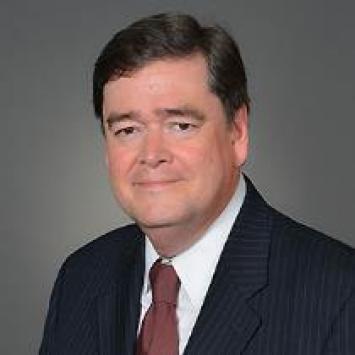
Bill Hortz
Founder Institute for Innovation Development
Wealthtender is a trusted, independent financial directory and educational resource governed by our strict Editorial Policy, Integrity Standards, and Terms of Use. While we receive compensation from featured professionals (a natural conflict of interest), we always operate with integrity and transparency to earn your trust. Wealthtender is not a client of these providers. ➡️ Find a Local Advisor | 🎯 Find a Specialist Advisor