Retirement planning is complicated. You have been in a savings mode for most of your life and retirement will be a big adjustment as you will be withdrawing money for the first time. You will also have a lot of available time, and you will want to devote that towards things that bring you happiness and fulfillment.
Some related questions we often hear about how to retire early:
How much do I need to have accumulated for retirement without sacrificing my standard of living?
Can I afford to shift from full-time to part-time and comfortably retire early?
How much do I need to have saved for healthcare expenses in my advanced years?
Get Clear About Your Goals
The first thing we do is to help clarify your goals and consider what you will do with the extra time that you have. Commonly, we see people doing more travel, finding a new hobby, buying a second home, or taking classes. Legacy goals would be things like funding education for grandkids or leaving a substantial amount to your favorite charities. Some others include helping adult children purchase their first home, taking the extended family on a vacation, or becoming more engaged with nonprofit organizations.
Lifestyle Stages
Next, we would look at your existing living expenses and determine how those would change during retirement. There are several phases of retirement where your expenses will look quite different, and the financial planning community affectionately refers to these as the “Go-Go years”, “Slow-Go years” and the “No-Go years.”
During your early retirement years, you are likely to spend as much or more than when you were working because you are more active and have the time and energy to enjoy more experiences with family and friends.
In mid-retirement years, you have crossed off bucket list items and find more fulfillment staying closer to home. Your expenses during the slow-go years are generally much less.
And finally, we enter the No-Go years, which is where health constraints come into play, and you are therefore unable to do as much. Medical costs are highest in late retirement and comprise a large amount of your living expenses. Oftentimes, these costs can quickly erode wealth transfer plans such as leaving a legacy to loved ones.
Stress Test
Lastly, we review various cash flow scenarios based on expected expenses and returns on your investments. This includes when to begin taking social security, including weighing the benefit of delaying the start year to help increase your retirement income.
By clarifying your goals and learning how your living expenses will change during various phases of your retirement, this will allow you to better answer how to retire early and fully enjoy your next stage of life.
Find financial advisors in Williamsburg, Virginia ready to help with your financial planning needs so you can enjoy life more with less money stress.
Whether you have lived in Williamsburg for years or recently moved to town, you may need help finding the right financial advisor in the community best suited for your individual needs.
It’s important to first consider your own financial planning priorities before choosing an advisor. Here are a few quick tips to help you get started along with financial advisors in Williamsburg featured on Wealthtender you may want to add to your shortlist.
Featured Williamsburg Financial Advisors
As you prepare to interview financial advisors in Williamsburg who may be right for you, get to know local financial advisors featured on Wealthtender.
📍 Advisors Who Serve Clients in Williamsburg
These advisors can meet with you in person in Williamsburg.
The Benefits of Hiring a Financial Advisor in Williamsburg
Hiring a financial advisor can be a great move to help you build a long-term investing strategy. Advisors can help you build an investment portfolio to meet your financial goals and help you plan appropriately for retirement.
As a resident living in Williamsburg, hiring a financial advisor who lives nearby and understands the local economy, cost of living, and regional employers can be quite valuable, especially if your individual circumstances are deeply tied to such factors.
Do you work for one of the largest employers in Williamsburg? If so, there’s a good chance the local financial advisor you hire will also have other clients who work there. This knowledge could prove valuable if they are already familiar with your employee benefits, such as a 401(k) plan, Health Savings Accounts, and other components of your total compensation package.
When you reach out to financial advisors you’re considering hiring, let them know where you work and ask if they are familiar with your employer’s unique benefits and compensation structure.
Quick Tips For Hiring an Williamsburg Financial Advisor
Before hiring a financial advisor in Williamsburg, here are a few quick tips to help you find the best advisor for you.
1. Decide Which Services You Need
Before hiring an advisor, determine what services you need from them. Whether it’s full-service investment management or a plan focused on a specific area of your finances, put together a list of what you’d like help with before contacting an advisor.
Though most people use a financial planner simply to invest for retirement, this is only a small part of what many advisors offer. Here’s a quick rundown of potential services a financial advisor may offer you:
Budgeting and money management
Debt management
Insurance planning
Retirement planning
Other investment planning
Inheritance planning
Estate planning
Tax planning
As you can see, financial advisors can help you with your entire financial picture, not just investing. As you start to plan for life’s bigger milestones, you should consider finding a financial advisor that specializes in those areas.
Finding the right advisor can help you minimize risk, maximize gains and take advantage of tax breaks while investing for your future. They can also help you protect your assets with the right kinds of insurance and help you pass on your financial legacy with a proper estate plan.
2. Consider Your Budget and Payment Preferences
Once you have a list of services you would like, review the fee structures financial advisors offer. Finding a balance between the services you need and the cost of those services will help narrow down the field of advisors you may want to work with.
If you are looking for a full-service advisor to manage all of your investments, consider searching among fee-based financial advisors. If you want to manage your money yourself, consider the flat fee and monthly subscription advisors for ongoing support.
3. Interview Multiple Financial Advisors
Once you have chosen the services and fee structure you prefer, it’s time to contact a few advisors and interview them. Here are questions to ask financial advisors:
What services do you provide?
What are all the ways you get paid? (fee transparency)
What is your investment strategy?
How do you measure investment performance?
How do we communicate about my plan?
Interview multiple advisors to get a feel for who you want to work with. A combination of fees, services, and customer service will help you determine the best fit for your financial advice.
4. Review Financial Advisor Credentials
Once you find an advisor (or two) you feel comfortable with, it’s always a good practice to check their credentials and the firm’s details. You can do this at the Investment Adviser Public Disclosure (IAPD) website.
You can check both the individual and the firm to view their background and experience details, as well as any disciplinary action taken against them or their firm.
As licensed financial professionals, there is oversight into how financial advisors conduct business, so running a quick (free) check on them is recommended.
For additional information about advisor credentials, read our article to learn the most popular designations held by financial advisors, as well as specialized credentials which may be important to consider if you have unique financial planning needs.
Frequently Asked Questions & Additional Resources
How do I know if I’m ready to hire a financial advisor?
You should strongly consider hiring a financial advisor if you have a significant amount of money available for saving or investing. This could occur after years of making annual contributions to a retirement plan like a 401(k) through your employer or suddenly if you receive a large inheritance or sell your house for a large profit.
But even if you don’t have a lot of money saved, many financial advisors and planners provide reasonable pricing options and valuable services you should consider, especially if you’re facing a significant life event. For example, if you’re starting a new job, getting married, starting a family, getting divorced, lost your job, starting or selling a business, or approaching retirement age, working with a trusted financial advisor or planner may prove worthwhile.
Before I hire a new financial advisor, should I fire my current advisor?
You don’t need to fire your current advisor before beginning your search for a new financial advisor. In fact, your new advisor can help coordinate the transition of your assets from your previous financial advisor.
Where can I read reviews about financial advisors written by their clients to help me decide if I should hire them?
After 60 years of regulatory prohibition of financial advisor reviews in the US, a rule issued by the Securities and Exchange Commission (SEC) became effective on May 4, 2021 that means both financial advisors and directory websites that help consumers search for a financial advisor can collect and display financial advisor reviews, an important factor worth considering when choosing who you’ll hire to manage your investments and life savings.
Wealthtender is the first independent advisor review platform designed to be fully compliant with the new SEC rule, and we look forward to helping you evaluate financial advisors based on reviews written by their clients.
I’m a local financial advisor interested in being featured in this guide. How do I get started?
Thanks for your interest. We look forward to learning more about your practice and helping you attract your ideal clients where you may be a good fit based on their individual needs and circumstances. Please click here to learn how you can join local financial advisors featured on Wealthtender.
Brian is CEO and founder of Wealthtender and Editor-in-Chief. He and his wife live in Austin, Texas. With over 25 years in the financial services industry, Brian is applying his experience and passion at Wealthtender to help more people enjoy life with less money stress. Learn More about Brian
Welcoming a new baby? There’s a lot to do, from packing the hospital bag to preparing the nursery. So it’s understandable if preparing financially sometimes takes a back seat. Here are five important financial moves to make if you’re expecting a baby.
Sort Out Your Heal Insurance
Health insurance is a major household expense for most Americans, and having a new baby means your insurance needs have automatically changed. This is why having a baby counts as a qualifying event, which means you have a chance to reassess and either add your baby to your policy or take out another, more suitable one.
Neither happen automatically though. You’ll need to make decisions either while you’re pregnant or shortly afterward. Most plans give you 30 to 60 days to add your child or change your plan, but it’s highly advisable to do it as soon as possible.
Consider the Worst Case Scenario
If something happens to you, you’ll want your child to be well cared for. Now is the time to consider getting life insurance if you don’t already have it (even those with no kids can sometimes benefit from it). Term life insurance can be particularly affordable for young healthy adults with children.
You’ll also want to make arrangements for what happens to your child in the event of your death. Morbid, yes, but necessary for your peace of mind. Typically you’ll make this part of your estate plan, naming a specific legal guardian who will take on care of your child if you’re not around.
Adjust Your Tax Forms
There are tax benefits to becoming a parent, so make sure you make the most of them. At the time of writing, there’s a tax credit of $2,000 per child to be claimed, but this could change so ask your tax professional for advice.
You might also want to consult a specialist financial planner, who can help you make the most of any potential financial benefits (and concerns) that having a child may present.
Consider a Dependent Care FSA if You’re Eligible
An FSA is a pre-tax savings account that’s sponsored by your employer. Contributions to it are automatically deducted from your paycheck, and the funds can be used for qualifying child care expenses such as daycare, preschool, summer day camp, and before or after school programs.
This account comes with tax advantages and the potential to save money on childcare, as well as a choice of payment and reimbursement options. Just remember that an FSA is a use-it-or-lose-it account. The funds don’t roll over to the next year if they’re not used, so look at what you expect to spend on childcare, make sure it’s qualifying care that the FSA will cover, then budget to pay in accordingly.
Look into a 529 Plan
Saving for your child’s college might be a long way from your mind when you bring your new-born home, but saving even a small regular monthly sum now will really add up over the next 18 years. A common way to save or your child’s future education is ta 529 plan. This is another account that provides tax advantages each year along with other potential incentives, and can eventually be used for qualified educational expenses.
While these plans are generally used to save for college expenses they can also potentially be used for elementary and secondary school expenses, such as enrolling your child in private schools or extra tuition. Check carefully exactly what your plan includes as a qualifying expense, and any terms or restrictions on how the money can be used, and plan accordingly.
Finances may not be top of mind as you adjust to being a new parent, or you may be focused on the typical (and considerable) short term expenses associated with having a baby. But it’s really worth looking into all of the above. Being proactive about finances will give you peace of mind and alleviate money stress later on.
About the Author
Karen Banes is a freelance writer specializing in entrepreneurship, parenting and lifestyle. She writes articles, website content, ebooks and the occasional award winning short story. Her work has appeared in a range of publications both online and off, including The Washington Post, Life Info Magazine, Transitions Abroad, Brave New Traveler, Natural Parenting Group, and Copia Magazine.
Learn More About Karen
Retirement marks a significant shift in financial strategy. No longer focused solely on accumulating wealth, retirees transitioning to a distribution phase of life many times find it hard to adjust to drawing down on the assets that they’ve built up for this specific purpose. It can be difficult to change from a mind set of just letting your retirement funds grow, riding out the ups and downs in the market, to now having to consider taking distributions from assets in times of market volatility. How do you ensure your investments are positioned to meet the short-term yet long-term goals of retirement? How do you maintain your lifestyle needs without having a paycheck coming in regularly?
Market turbulence can pose a serious threat to retirement portfolios, especially for those without a clear plan. Understanding how to weather financial uncertainty in retirement is essential.
The Challenge of Market Volatility in Retirement
Volatility is an inherent feature of investing. Markets go through cycles, reacting to economic data, geopolitical events, and investor sentiment. However, in retirement, the stakes are higher. Portfolio drawdowns during a bear market can have lasting consequences, especially if withdrawals are being made simultaneously.
This is known as sequence-of-returns risk: the danger that negative returns in early retirement years can irreparably damage a portfolio’s longevity. Protecting against this risk is critical.
Setting a Foundation: Income Needs and Spending Plans
A retirement portfolio must first and foremost be aligned with personal income needs. Start with a detailed retirement budget, including fixed expenses (housing, insurance, taxes) and discretionary spending (travel, hobbies, gifting). Factor in inflation and potential healthcare costs, which often rise with age.
From here, determine a sustainable withdrawal rate. While the traditional 4% rule offers a rough guideline, working with a financial advisor can help you dive deeper into your specific situation to develop strategies and a plan that can be more dynamic. Personalized withdrawal strategies can help adapt to market conditions, optimizing longevity without sacrificing lifestyle.
Diversification: Your First Line of Defense
Diversification remains one of the most effective ways to manage risk in volatile markets. A well-diversified portfolio spreads investments across asset classes (stocks, bonds, real assets), sectors, and geographies. This reduces the impact of a downturn in any one area.
For retirees, this becomes extremely important. If the stock market goes down significantly, many times bonds or other assets will maintain their value or even have positive returns during those same time periods. Having the ability to take distributions from a portion of the portfolio that hasn’t declined, allows the stocks to recover while not having to sell them at the lower values. Finding the proper allocation between stocks, bonds, and other alternative investments for your specific situation is key in being able to continually meet your goals through retirement.
The Role of Cash Reserves and Bucketing Strategies
Maintaining a cash reserve is a simple yet powerful strategy to protect against downturns. This reserve—often covering 12 to 24 months of expenses—provides a buffer, allowing retirees to avoid selling investments during a market dip.
Many financial professionals also employ a “bucketing” strategy, where assets are segmented based on the time horizon for when they will be used. For example:
Bucket 1: Cash and short-term bonds for immediate needs (0-2 years)
Bucket 2: Intermediate investments for mid-term expenses (3-7 years)
Bucket 3: Growth-oriented assets for long-term needs (8+ years)
This approach allows the portfolio to weather short-term volatility while still participating in long-term market gains.
Rebalancing with Discipline
Volatile markets often throw portfolios out of alignment. Left unchecked, this drift can increase risk beyond intended levels. Rebalancing ensures that asset allocations remain consistent with a retiree’s goals and risk tolerance.
Regularly scheduled rebalancing—whether quarterly, semi-annually, or annually—can enforce discipline. In declining markets, rebalancing often means buying stocks while they’re on sale, an emotionally difficult but often financially rewarding decision.
Social Security, Pensions, and Annuities: Building a Floor of Income
Guaranteed income sources form the bedrock of retirement stability. For many, this starts with Social Security. The decision of when to claim benefits has a significant impact on monthly income and should be evaluated in the context of overall retirement strategy.
Those with access to pensions or considering annuities can use these tools to build a “floor” of income—a baseline level that covers essential expenses. This reduces the pressure on investment portfolios and can increase peace of mind.
Tax-Aware Withdrawal Strategies
Market volatility isn’t the only risk to retirement income. Taxes can quietly erode wealth if not managed strategically. A well-designed withdrawal strategy considers the tax implications of different account types (tax-deferred, tax-free, taxable).
Roth conversions, timing of required minimum distributions (RMDs), and capital gain planning all play a role in optimizing after-tax income. In volatile markets, harvesting losses from taxable accounts can also help offset gains and reduce tax liabilities.
Partnering with a Financial Advisor
Retirement planning through volatile markets isn’t a one-time task—it’s an ongoing process that requires regular monitoring, adjustments, and strategic decision-making. A trusted financial advisor can provide guidance rooted in experience and tailored to individual needs.
At Tenet Wealth Partners, we help clients build resilient retirement plans designed to endure market cycles. We take a comprehensive view, integrating investment management, income planning, tax strategies, and legacy goals into a cohesive strategy.
Conclusion: Staying the Course with Confidence
Market volatility can stir anxiety, particularly for retirees drawing income from their portfolios. But with a clear plan, diversified assets, strategic income layers, and professional guidance, it’s possible to weather uncertainty without compromising lifestyle.
The goal isn’t to avoid risk entirely, but to manage it wisely. Through proactive planning, you can create a retirement portfolio that offers both stability and the flexibility to adapt to whatever the markets may bring.
Find financial advisors in Reno, Nevada ready to help with your financial planning needs so you can enjoy life more with less money stress.
Whether you have lived in Reno for years or recently moved to town, you may need help finding the right financial advisor in the community best suited for your individual needs.
It’s important to first consider your own financial planning priorities before choosing an advisor. Here are a few quick tips to help you get started along with financial advisors in Reno featured on Wealthtender you may want to add to your shortlist.
Featured Reno Financial Advisors
As you prepare to interview financial advisors in Reno who may be right for you, get to know local financial advisors featured on Wealthtender.
📍 Map: Financial Advisors with their Primary Office Location in Reno
Double-click (or pinch the map on mobile devices) to zoom in and expand the details for financial advisors whose primary office location is in Reno.
The Benefits of Hiring a Financial Advisor in Reno
Hiring a financial advisor can be a great move to help you build a long-term investing strategy. Advisors can help you build an investment portfolio to meet your financial goals and help you plan appropriately for retirement.
As a resident living in Reno, hiring a financial advisor who lives nearby and understands the local economy, cost of living, and regional employers can be quite valuable, especially if your individual circumstances are deeply tied to such factors.
Do you work for one of the largest employers in Reno? If so, there’s a good chance the local financial advisor you hire will also have other clients who work there. This knowledge could prove valuable if they are already familiar with your employee benefits, such as a 401(k) plan, Health Savings Accounts, and other components of your total compensation package.
When you reach out to financial advisors you’re considering hiring, let them know where you work and ask if they are familiar with your employer’s unique benefits and compensation structure.
Quick Tips For Hiring a Reno Financial Advisor
Before hiring a financial advisor in Reno, here are a few quick tips to help you find the best advisor for you.
1. Decide Which Services You Need
Before hiring an advisor, determine what services you need from them. Whether it’s full-service investment management or a plan focused on a specific area of your finances, put together a list of what you’d like help with before contacting an advisor.
Though most people use a financial planner simply to invest for retirement, this is only a small part of what many advisors offer. Here’s a quick rundown of potential services a financial advisor may offer you:
Budgeting and money management
Debt management
Insurance planning
Retirement planning
Other investment planning
Inheritance planning
Estate planning
Tax planning
As you can see, financial advisors can help you with your entire financial picture, not just investing. As you start to plan for life’s bigger milestones, you should consider finding a financial advisor that specializes in those areas.
Finding the right advisor can help you minimize risk, maximize gains and take advantage of tax breaks while investing for your future. They can also help you protect your assets with the right kinds of insurance and help you pass on your financial legacy with a proper estate plan.
2. Consider Your Budget and Payment Preferences
Once you have a list of services you would like, review the fee structures financial advisors offer. Finding a balance between the services you need and the cost of those services will help narrow down the field of advisors you may want to work with.
If you are looking for a full-service advisor to manage all of your investments, consider searching among fee-based financial advisors. If you want to manage your money yourself, consider the flat fee and monthly subscription advisors for ongoing support.
3. Interview Multiple Financial Advisors
Once you have chosen the services and fee structure you prefer, it’s time to contact a few advisors and interview them. Here are questions to ask financial advisors:
What services do you provide?
What are all the ways you get paid? (fee transparency)
What is your investment strategy?
How do you measure investment performance?
How do we communicate about my plan?
Interview multiple advisors to get a feel for who you want to work with. A combination of fees, services, and customer service will help you determine the best fit for your financial advice.
4. Review Financial Advisor Credentials
Once you find an advisor (or two) you feel comfortable with, it’s always a good practice to check their credentials and the firm’s details. You can do this at the Investment Adviser Public Disclosure (IAPD) website.
You can check both the individual and the firm to view their background and experience details, as well as any disciplinary action taken against them or their firm.
As licensed financial professionals, there is oversight into how financial advisors conduct business, so running a quick (free) check on them is recommended.
For additional information about advisor credentials, read our article to learn the most popular designations held by financial advisors, as well as specialized credentials which may be important to consider if you have unique financial planning needs.
Frequently Asked Questions & Additional Resources
How do I know if I’m ready to hire a financial advisor?
You should strongly consider hiring a financial advisor if you have a significant amount of money available for saving or investing. This could occur after years of making annual contributions to a retirement plan like a 401(k) through your employer or suddenly if you receive a large inheritance or sell your house for a large profit.
But even if you don’t have a lot of money saved, many financial advisors and planners provide reasonable pricing options and valuable services you should consider, especially if you’re facing a significant life event. For example, if you’re starting a new job, getting married, starting a family, getting divorced, lost your job, starting or selling a business, or approaching retirement age, working with a trusted financial advisor or planner may prove worthwhile.
Before I hire a new financial advisor, should I fire my current advisor?
You don’t need to fire your current advisor before beginning your search for a new financial advisor. In fact, your new advisor can help coordinate the transition of your assets from your previous financial advisor.
Where can I read reviews about financial advisors written by their clients to help me decide if I should hire them?
After 60 years of regulatory prohibition of financial advisor reviews in the US, a rule issued by the Securities and Exchange Commission (SEC) became effective on May 4, 2021 that means both financial advisors and directory websites that help consumers search for a financial advisor can collect and display financial advisor reviews, an important factor worth considering when choosing who you’ll hire to manage your investments and life savings.
Wealthtender is the first independent advisor review platform designed to be fully compliant with the new SEC rule, and we look forward to helping you evaluate financial advisors based on reviews written by their clients.
I’m a local financial advisor interested in being featured in this guide. How do I get started?
Thanks for your interest. We look forward to learning more about your practice and helping you attract your ideal clients where you may be a good fit based on their individual needs and circumstances. Please click here to learn how you can join local financial advisors featured on Wealthtender.
Brian is CEO and founder of Wealthtender and Editor-in-Chief. He and his wife live in Austin, Texas. With over 25 years in the financial services industry, Brian is applying his experience and passion at Wealthtender to help more people enjoy life with less money stress. Learn More about Brian
Ask an Advisor: Should You Invest Differently in Retirement Than While Saving?
Image Credit: Wealthtender.
Here’s Why the Math Changes: Investing Before vs. In Retirement
There’s a significant difference between the math of a retirement portfolio and that of a saver’s portfolio.
The main cause of this difference?
Portfolio withdrawals.
A saver’s portfolio benefits from regular contributions and the power of compounding over time, whereas routine and sometimes unexpected withdrawals gradually diminish a retirement portfolio.
Most retirement research focuses on managing this risk with ‘safe withdrawal’ strategies, the most famous being the 4% rule. However, there are many approaches to suit different needs and spending plans.
While everyone needs a withdrawal strategy tailored to their spending needs, many overlook the importance of investing their retirement portfolio differently than their saver’s portfolio.
The first thing to note is that there is no perfect investment strategy. The best investment strategy is one that you can stick to for the long run.
How do you choose the best investment strategy for yourself?
By reviewing market history.
Fortunately, this doesn’t require a fancy credential like a CFA, nor does it require extensive backtesting. Numerous studies and tools are available to help you gain a big-picture understanding of how your investment strategy handles certain market environments.
To be clear, the point isn’t to use history to predict the future, but to use it as a guide. Understanding past market environments helps you appreciate the value of risk management, so you’re better prepared when history repeats or rhymes.
Q: Can you explain what you mean by the “math of a retirement portfolio differs from a saver’s portfolio?”
Nate: The best way to explain this is by taking a recent real-world, worst-case scenario using your current investment strategy. However, let’s keep it easy and focus on it through the lens of basic math.
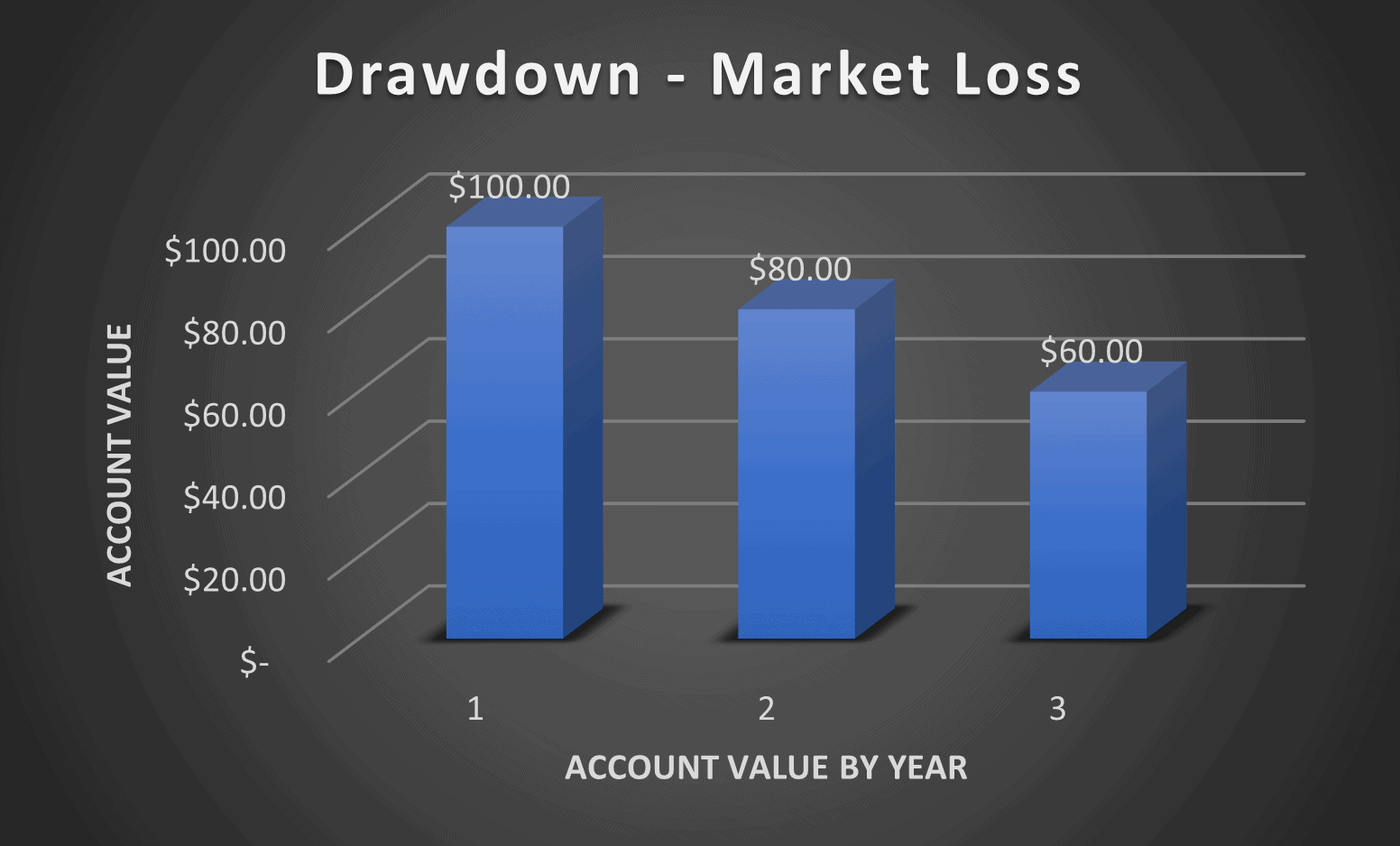
First, you must understand that a market drop has a linear impact on your portfolio balance in the absence of moving funds into or out of your portfolio:
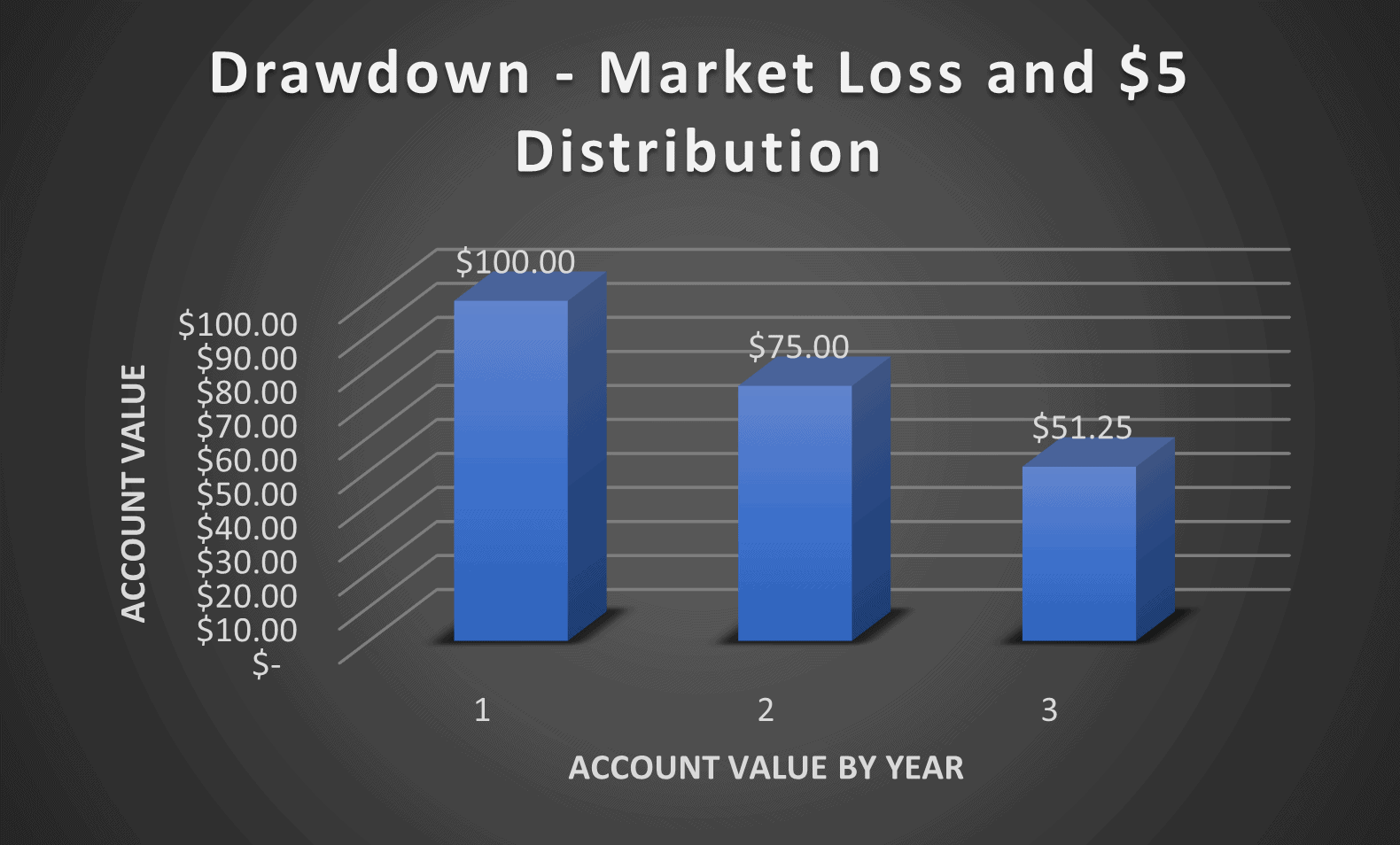
Next, when you introduce portfolio withdrawals, the losses are magnified:
Year 1 = 20% investment loss.
Year 2 = 25% investment loss.
A key clarification on the two images above. Both images show a 20% and 25% investment loss, but image #2 introduces portfolio withdrawals which turns that 20% loss into a 25% drawdown and 31.67% drawdown. A portfolio drawdown is the decline in value of an investment from it’s peak, which ultimately is the number that matters because it considers both portfolio losses and distributions.
Awareness of drawdowns is important because it brings us to the most important factor of all.
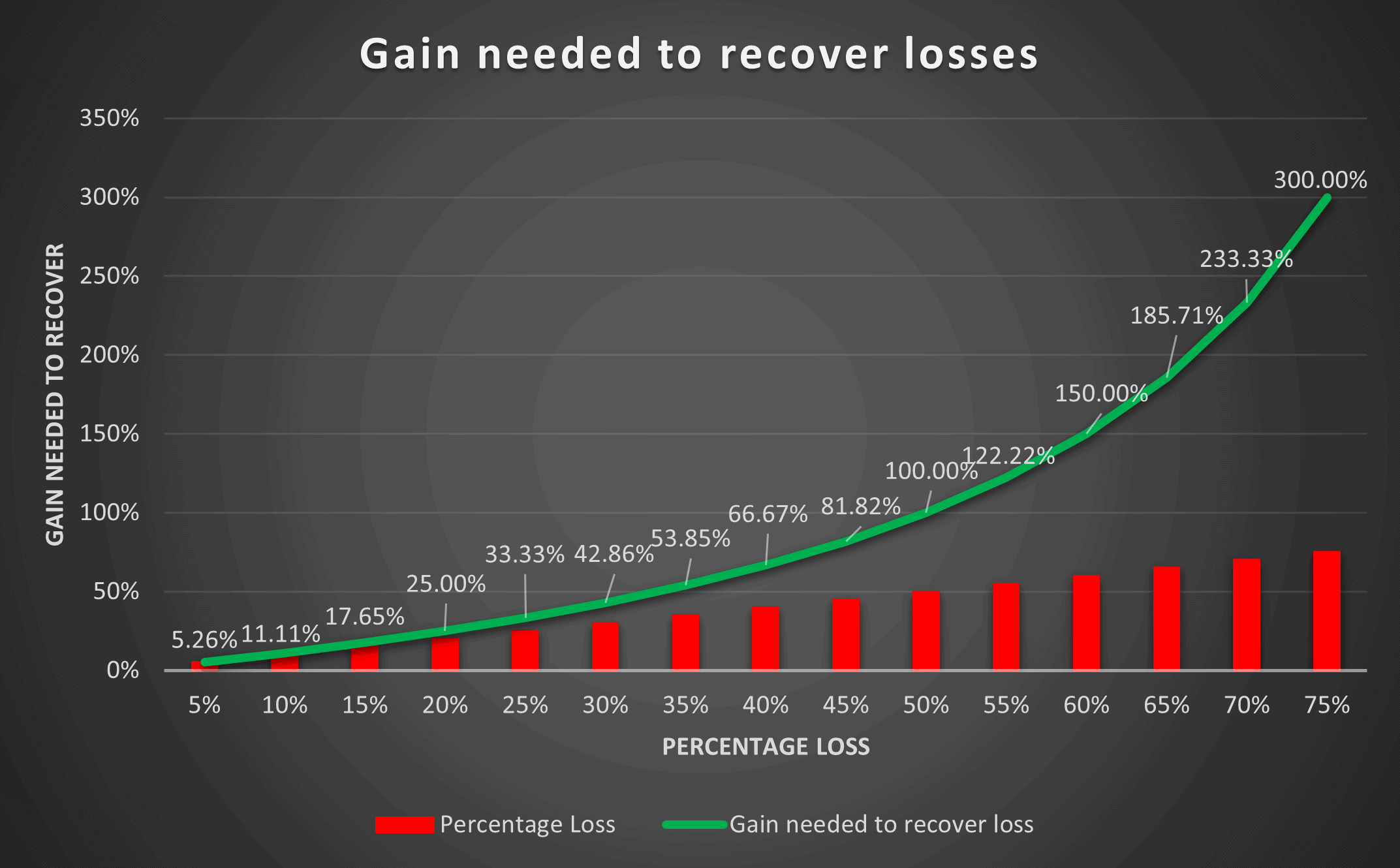
The math of gains and losses.
Why does the math of gains and losses matter? It’s because the math of gains and losses is “nonlinear.” This means that as the loss gets bigger, the gain needed to recover the loss increases at an exponential rate:
Market losses are an inevitable part of investing. Portfolio withdrawals are an inevitable part of a happy retirement.
Therefore, you need to understand that withdrawals magnify losses, and the larger the loss, the longer it takes to recover.
With this in mind, you can see how the math of a retirement portfolio differs from the math of a saver’s portfolio.
Q: When meeting with new clients, how do you describe how they should invest their retirement portfolio differently from their saver’s portfolio?
Nate: The first thing I do is try to understand their beliefs and experience surrounding investing. Understanding their beliefs and experiences is critical to helping them choose the right investment process.
This leads to a discussion that involves examining market history. I highlight the best and worst periods for each asset class (e.g., stocks, bonds, and real assets), as well as average times, to give a balanced perspective.
Completing this exercise creates many ah-ha moments.
Before understanding this concept, most retirees base their investment decisions on what’s worked well recently. This recency bias has blinded them to the fact that different economic environments can exist. It proves that no asset class is always superior, so a prudent approach to diversification provides the risk management they need in retirement.
The final step in the process is to expand their awareness around alternative risk management options such as trend following, or what I like to call “tactical asset allocation.” Tactical Asset Allocation (TAA) is a flexible approach that adjusts your investment mix based on changing market conditions, aiming to manage risk and seize opportunities as they arise.
Tactical Asset Allocation (TAA) will lean into or sit out of certain asset classes when its risk/reward ratio is favorable or unfavorable. This helps remove our natural recency bias as investors, where we tend to own what’s worked for the past few years. It ultimately gives us a solid process for owning asset classes that were previously out of favor or with which we are unfamiliar.
Q: How did you first learn why you must treat a retirement portfolio different from a saver’s portfolio, and what led you to specialize in helping your clients choose the right investment process for their retirement?
Nate: The biggest influence on my awareness around this issue goes to Todd Tressider of FinancialMentor.com who created the Expectancy Wealth Planning course. The next influential resources are from Meb Faber’s Global Asset Allocation and Quantitative Approach to Tactical Asset Allocation. Finally, the cherry on top is from work by James Sandidge’s work on retirement income risks. You can find a complete list of my favorite resources by clicking here and scrolling to the bottom of the page.
After learning from some of the brightest minds in retirement, I felt like it was my duty to spread the word and help more people avoid the negative effects of mistreating their portfolio in retirement. You only have one shot at a financially successful retirement, so taking a careful approach to designing a retirement portfolio is a critical step in the right direction.
Q: Are there particular market environments where you feel it’s more important prudently manage a retirement portfolio?
Nate: While every retiree must take a prudent approach to managing their retirement portfolio, there are certain market environments where you need to be more aggressive with your portfolio risk management.
A retirement portfolio is at its greatest risk during periods of:
High market valuations
Low interest rates
High or volatile inflation.
These environments can amplify risks for retirees, making prudent risk management and diversification even more critical.
Since most investors base their investment decisions based on what’s worked well most recently, they typically find themselves invested in asset classes with high market valuations. While some asset classes warrant a higher valuation, the higher the valuation of that asset class, the lower probability of it continuing to grow the way it did in the past.
That said, valuation should never be used as a timing tool. It’s best used as an expectations tool.
If interest rates are low, then asset classes that are interest rate sensitive will pay a lower yield and face headwinds as interest rates rise. Possibly worst of all is high or volatile inflation periods that often present complex periods for traditional stock and bond portfolios to navigate.
Since we’re always dealing with an unknowable future, it’s my preference to include properly designed tactical asset allocation within a retirement portfolio. It will never provide the “perfect” allocation for the time period, but it can provide a much more consistent return stream through all economic regimes, which is an important feature of a retirement portfolio.
You only get one shot at a financially secure retirement. By understanding the unique challenges of retirement investing and adopting a flexible, risk-aware approach, you can better protect your nest egg and enjoy the retirement you’ve worked so hard to achieve.
Have a Question to Ask a Financial Advisor?
When you’re uncertain about money matters, submit your question to Wealthtender, and it may be answered by a financial advisor in an upcoming article or in the Wealthtender Expert Answers Forum.
Need personalized help? Visit wealthtender.com to find the right financial advisor for your unique needs.
This article was originally published on Wealthtender and is intended for informational purposes only and should not be considered financial advice. You should consult a financial professional before making any major financial decisions. Wealthtender earns money from financial professionals, which creates a conflict of interest when these professionals are featured in articles over others. Read the Wealthtender editorial policy and terms of service to learn more. Wealthtender is not a client of these financial services providers.
About the Author
Nate Byers, CPA/PFSHelping families navigate the retirement transition
Areas of Focus
Estate PlanningInvestment ManagementRetirement PlanningRetiring Early (F.I.R.E)Tax-Smart Distribution Planning
Ask an Advisor: Should I Merge My Small Business? Key Considerations Before Taking the Leap
Image Credit: Wealthtender
Merging your small business with another can be a strategic move that unlocks growth, profitability, and new market opportunities. But it’s not a decision to take lightly. While a well-planned merger can help scale your business faster, a poorly executed one can lead to serious setbacks—even failure.
In this guide, we’ll explore the pros and cons of merging a small business, key factors to evaluate before proceeding, and critical steps to ensure a successful integration. Whether you’re seeking increased market share or expanded service offerings, this article will help you determine if a merger is the right path forward.
Why Consider a Small Business Merger?
Mergers are often pursued when both companies have aligned business goals. Here are some strategic advantages to consider:
Accelerate revenue growth: Break through growth plateaus with a larger resource pool.
Expand into new markets: Reach untapped geographic or industry sectors.
Increase market share: Compete more effectively with larger players.
Attract new customers: Leverage a wider audience and broader offerings.
Broaden service capabilities: Fill gaps in your product or service lineup.
Strengthen competitive edge: Move faster and smarter with combined expertise.
Enhance profitability: Cut operational costs through shared infrastructure.
What to Look for in a Potential Merger Partner
Before diving into merger talks, ask yourself: “What’s in it for them?” A successful merger depends on strong alignment between both parties. Key factors to evaluate include:
Shared vision, mission, and values
Cultural compatibility
Complementary strengths and capabilities
Synergies in operations, staffing, and resources
Potential for efficiency and streamlined processes
Potential Risks and Pitfalls of Merging
Mergers may look good on paper, but the reality is more complex. In fact, 70–90% of mergers and acquisitions fail, often due to cultural misalignment, poor communication, or integration challenges. From personal experience, I once went through a merger that resulted in losing top clients and nearly escalated to legal action.
Some common challenges include:
Loss of autonomy and control
Client dissatisfaction or attrition
Difficulty integrating systems or teams
Increased financial burden
Rising operational costs
Employee uncertainty and turnover
Transparency with staff throughout the process is crucial. If team members feel left in the dark, they may lose trust and start looking elsewhere.
How to Determine If a Merger Is Right for You
Not every business is merger-ready. To assess your merger viability, take a deliberate and informed approach:
Ask the hard questions: What’s the real benefit—for both sides?
Build your advisory team: A financial planner, accountant, and attorney are essential.
Take your time: Treat it like dating—spend at least a year in exploratory discussions to ensure alignment and compatibility.
Final Thoughts: Is a Merger the Right Growth Strategy?
A merger can be a powerful way to scale your small business—but only when it’s approached with clarity, strategy, and due diligence. By understanding both the opportunities and risks, you’ll be better positioned to make a smart, informed decision.
Ready to Explore a Merger?
If you’re considering merging your small business and want guidance through the process, schedule a consultation today. Let’s talk through your options and help you build a roadmap to sustainable growth.
Have a Question to Ask a Financial Advisor?
When you’re uncertain about money matters, submit your question to Wealthtender, and it may be answered by a financial advisor in an upcoming article or in the Wealthtender Expert Answers Forum.
Need personalized help? Visit wealthtender.com to find the right financial advisor for your unique needs.
This article was originally published on Wealthtender and is intended for informational purposes only and should not be considered financial advice. You should consult a financial professional before making any major financial decisions. Wealthtender earns money from financial professionals, which creates a conflict of interest when these professionals are featured in articles over others. Read the Wealthtender editorial policy and terms of service to learn more. Wealthtender is not a client of these financial services providers.
Find financial advisors in Bismarck, North Dakota ready to help with your financial planning needs so you can enjoy life more with less money stress.
Whether you have lived in Bismarck for years or recently moved to town, you may need help finding the right financial advisor in the community best suited for your individual needs.
It’s important to first consider your own financial planning priorities before choosing an advisor. Here are a few quick tips to help you get started along with financial advisors in Bismarck featured on Wealthtender you may want to add to your shortlist.
Featured Bismarck Financial Advisors
As you prepare to interview financial advisors in Bismarck who may be right for you, get to know local financial advisors featured on Wealthtender.
📍 Map: Financial Advisors with their Primary Office Location in Bismarck
Double-click (or pinch the map on mobile devices) to zoom in and expand the details for financial advisors whose primary office location is in Bismarck.
The Benefits of Hiring a Financial Advisor in Bismarck
Hiring a financial advisor can be a great move to help you build a long-term investing strategy. Advisors can help you build an investment portfolio to meet your financial goals and help you plan appropriately for retirement.
As a resident living in Bismarck, hiring a financial advisor who lives nearby and understands the local economy, cost of living, and regional employers can be quite valuable, especially if your individual circumstances are deeply tied to such factors.
Do you work for one of the largest employers in Bismarck? If so, there’s a good chance the local financial advisor you hire will also have other clients who work there. This knowledge could prove valuable if they are already familiar with your employee benefits, such as a 401(k) plan, Health Savings Accounts, and other components of your total compensation package.
When you reach out to financial advisors you’re considering hiring, let them know where you work and ask if they are familiar with your employer’s unique benefits and compensation structure.
Quick Tips For Hiring a Bismarck Financial Advisor
Before hiring a financial advisor in Bismarck, here are a few quick tips to help you find the best advisor for you.
1. Decide Which Services You Need
Before hiring an advisor, determine what services you need from them. Whether it’s full-service investment management or a plan focused on a specific area of your finances, put together a list of what you’d like help with before contacting an advisor.
Though most people use a financial planner simply to invest for retirement, this is only a small part of what many advisors offer. Here’s a quick rundown of potential services a financial advisor may offer you:
Budgeting and money management
Debt management
Insurance planning
Retirement planning
Other investment planning
Inheritance planning
Estate planning
Tax planning
As you can see, financial advisors can help you with your entire financial picture, not just investing. As you start to plan for life’s bigger milestones, you should consider finding a financial advisor that specializes in those areas.
Finding the right advisor can help you minimize risk, maximize gains and take advantage of tax breaks while investing for your future. They can also help you protect your assets with the right kinds of insurance and help you pass on your financial legacy with a proper estate plan.
2. Consider Your Budget and Payment Preferences
Once you have a list of services you would like, review the fee structures financial advisors offer. Finding a balance between the services you need and the cost of those services will help narrow down the field of advisors you may want to work with.
If you are looking for a full-service advisor to manage all of your investments, consider searching among fee-based financial advisors. If you want to manage your money yourself, consider the flat fee and monthly subscription advisors for ongoing support.
3. Interview Multiple Financial Advisors
Once you have chosen the services and fee structure you prefer, it’s time to contact a few advisors and interview them. Here are questions to ask financial advisors:
What services do you provide?
What are all the ways you get paid? (fee transparency)
What is your investment strategy?
How do you measure investment performance?
How do we communicate about my plan?
Interview multiple advisors to get a feel for who you want to work with. A combination of fees, services, and customer service will help you determine the best fit for your financial advice.
4. Review Financial Advisor Credentials
Once you find an advisor (or two) you feel comfortable with, it’s always a good practice to check their credentials and the firm’s details. You can do this at the Investment Adviser Public Disclosure (IAPD) website.
You can check both the individual and the firm to view their background and experience details, as well as any disciplinary action taken against them or their firm.
As licensed financial professionals, there is oversight into how financial advisors conduct business, so running a quick (free) check on them is recommended.
For additional information about advisor credentials, read our article to learn the most popular designations held by financial advisors, as well as specialized credentials which may be important to consider if you have unique financial planning needs.
Frequently Asked Questions & Additional Resources
How do I know if I’m ready to hire a financial advisor?
You should strongly consider hiring a financial advisor if you have a significant amount of money available for saving or investing. This could occur after years of making annual contributions to a retirement plan like a 401(k) through your employer or suddenly if you receive a large inheritance or sell your house for a large profit.
But even if you don’t have a lot of money saved, many financial advisors and planners provide reasonable pricing options and valuable services you should consider, especially if you’re facing a significant life event. For example, if you’re starting a new job, getting married, starting a family, getting divorced, lost your job, starting or selling a business, or approaching retirement age, working with a trusted financial advisor or planner may prove worthwhile.
Before I hire a new financial advisor, should I fire my current advisor?
You don’t need to fire your current advisor before beginning your search for a new financial advisor. In fact, your new advisor can help coordinate the transition of your assets from your previous financial advisor.
Where can I read reviews about financial advisors written by their clients to help me decide if I should hire them?
After 60 years of regulatory prohibition of financial advisor reviews in the US, a rule issued by the Securities and Exchange Commission (SEC) became effective on May 4, 2021 that means both financial advisors and directory websites that help consumers search for a financial advisor can collect and display financial advisor reviews, an important factor worth considering when choosing who you’ll hire to manage your investments and life savings.
Wealthtender is the first independent advisor review platform designed to be fully compliant with the new SEC rule, and we look forward to helping you evaluate financial advisors based on reviews written by their clients.
I’m a local financial advisor interested in being featured in this guide. How do I get started?
Thanks for your interest. We look forward to learning more about your practice and helping you attract your ideal clients where you may be a good fit based on their individual needs and circumstances. Please click here to learn how you can join local financial advisors featured on Wealthtender.
Brian is CEO and founder of Wealthtender and Editor-in-Chief. He and his wife live in Austin, Texas. With over 25 years in the financial services industry, Brian is applying his experience and passion at Wealthtender to help more people enjoy life with less money stress. Learn More about Brian
Do you work at Spotify? Get the resources you need and expert insights from financial professionals who specialize in helping Spotifyemployees make the most of their compensation package and benefits.
Whether you’re a new Spotify employee or you’ve moved up the ranks into a management or executive leadership role over a multi-year career, it’s important to make smart money moves with your income and employee benefits. For example:
✅ Do you know the right moves to make to get the greatest value from the Spotify benefits available to you?
✅If you’re thinking about leaving Spotify for another job or planning to retire from the company in a few years, are you taking the right steps today to ensure you will receive all of the compensation and benefits that you’ve earned?
Get the Most Value from Your Spotify Benefits and Compensation Package
Throughout the year, Spotify provides its employees and executives with updates about their benefits ranging from health insurance and health savings plans to retirement plans like a 401(k), deferred compensation plans, and stock options. While the company offers many useful resources and access to knowledgeable staff who can assist with questions, you’ll also find financial professionals not affiliated with Spotify who specialize in helping Spotify employees make the most of their income and benefits.
Whether you work in the Spotify US headquarters in Manhattan at 4 World Trade Center, another office location around the world, or remotely from home, you may have questions about your compensation package and benefits better suited for a financial professional who can offer unbiased advice and guidance.
For example, sensitive topics like discussing the steps you should take before quitting your job at Spotify to work elsewhere, protecting yourself in advance of a corporate layoff, or deciding when you should plan to retire are all conversations that may be more comfortable with a trusted financial advisor.
Should you hire a Spotify specialist financial advisor or an advisor close to home?
You’ll likely find dozens of nearby financial advisors well-suited to help you reach your money goals with a personalized plan. But it may be more difficult to find a financial advisor who specializes in serving Spotify employees.
Fortunately, many financial advisors offer virtual services so you can meet online no matter where you (or they) live.
This means you can choose to hire a specialist financial advisor who lives hundreds of miles away if you decide their knowledge and experience working with Spotify employees is a better fit to help with your unique needs.
💡 In the Q&A below, you’ll gain insights from financial advisors who work with Spotify employees to help them make smart decisions to get the most value from their compensation and benefits, reduce their money stress, and prepare for a comfortable retirement.
🙋♀️ Do you have questions not yet answered? Use the form below to submit questions anonymously and watch this article for updates with answers to your questions. You can also reach out to the financial advisors below to set up an introductory call or contact them with your questions by email.
💸 Smart Money Insights for Spotify Employees & Executives
This page is organized into sections to help you quickly find the information you need and get answers to your questions:
Q&A: Financial Planning Tips for SpotifyEmployees & Executives
Get Answers to Your Questions About Your SpotifyBenefits and Career
Browse Related Articles
Q&A: Financial Planning Tips for Spotify Employees & Executives
Answers to Employee Questions with AJ Ayers, CFP®, EA, CEP, RLP
AJ Ayers is a financial advisor based in Brooklyn, New York who specializes in offering financial planning services to Spotify employees. AJ helps her clients get the most value from their Spotify benefits and compensation package so they can enjoy life and feel confident about their financial future.
Q: As a financial advisor with experience helping Spotify employees save for their retirement, how do you help them make the most of their employee benefits?
AJ: At Brooklyn Fi, we ensure employees capture Spotify’s 401(k) match (50% of the first 6% contributed). The hidden gem is their mega backdoor Roth opportunity – additional after-tax contributions that can be rolled into a Roth where they grow tax-free, perfect for high earners excluded from direct Roth contributions. We also coordinate retirement planning with Spotify’s flexible equity structure, creating strategies that balance current compensation choices with long-term goals.
Q: When you first speak with a Spotify employee, what questions do you like to ask to better understand their unique circumstances and determine how you can best help them achieve their goals?
AJ: We focus on five areas:
Equity Comp. Structure: “What mix of cash, RSUs, and options did you choose?”
Career Vision: “Is Spotify a long-term home or a stepping stone?”
Risk Tolerance: “How do you feel about tying compensation to stock performance?
Personal Priorities: “What financial goals matter most outside work?”
These questions help us build a practical approach that makes the most of their unique Spotify benefits while addressing personal financial goals.
Q: Is there a particular benefit available to Spotify employees you feel isn’t as well utilized or understood by employees as it should be?
AJ: The HSA paired with Spotify’s High Deductible Health Plan is criminally underutilized. Spotify contributes $1,000 for individuals and $2,000 for families to your HSA. Combined with your contributions, it’s a triple tax win: tax-deductible going in, tax-free growth, and tax-free withdrawals for medical expenses. For employees who can pay current medical expenses from cash flow, the HSA becomes a stealth retirement account. Medical expenses typically increase in retirement, so having a dedicated tax-free bucket for them is pure financial planning gold.
Q: Beyond Spotify employee benefits for retirement savings, are there other types of benefits offered by the company that you find valuable to discuss with your clients?
AJ: Spotify’s “build-your-own-compensation” approach with four options (Cash, RSUs, At-the-money options, Out-of-the-money options) is unique and deserves serious attention. Choosing the right mix based on your risk tolerance and timeline can dramatically impact your wealth. The legal services plan is also worth discussing, especially for those starting families or buying homes. And don’t overlook the Dependent Care FSA, which allows pre-tax contributions up to $5,000 annually for childcare expenses.
Q: For Spotify employees thinking about leaving the company to accept a job elsewhere, what actions do you recommend they take before resigning and shortly thereafter?
AJ: Before leaving Spotify:
Review all vesting schedules – leaving just before a significant vesting date could mean leaving serious money on the table.
Understand NQSO exercise windows – Spotify typically offers a 5-year window (half the standard 10-year window at most tech companies).
Determine your Spotify concentration risk and whether you should exercise options before departure.
Q: For Spotify employees approaching retirement age, how do you recommend they prepare to make the transition from living off their salary to relying upon other sources of income?
AJ: First, analyze your Spotify equity positions and create a multi-year transition strategy that includes:
Systematic diversification of concentrated positions (emotional selling is the enemy of wealth).
Tax-efficient withdrawal sequencing (which accounts to tap first).
Building a “retirement paycheck” from investment income and systematic withdrawals.
Start this planning several years before retirement to optimize the tax implications and position your portfolio for the income phase of life.
Q: For Spotify employees who have managed their finances on their own to this point, what would you suggest they consider to help them decide if they should begin working with a financial advisor at this stage in their lives?
AJ: Consider professional help when complexity outpaces your time or expertise. Key triggers include navigating Spotify’s four-option compensation structure, managing RSU tax withholding shortfalls (Spotify typically withholds at only 22% – hello surprise tax bill!), major life transitions, or simply when career demands limit your financial planning time. Look for advisors with specific knowledge of Spotify’s unique compensation structure and experience with their mega backdoor Roth strategy. The right advisor should integrate tax preparation, investment management, and estate planning, not just focus on investments.
Q: What are some of the unique financial planning challenges you commonly see among your clients who are Spotify employees and how do you help them overcome these obstacles?
AJ: Spotify employees face some distinct challenges:
Concentration risk from accumulated equity positions. We develop systematic diversification strategies that balance emotional attachment to company stock with prudent portfolio management.
Equity selection confusion between four options with different risk-reward profiles. We model scenarios based on potential stock performance and your risk tolerance.
Tax withholding shortfalls from RSU vesting. We implement quarterly tax projections and establish tax reserves to prevent surprise tax bills.
Get to Know AJ Ayers, Financial Advisor for Spotify Employees:
Q: Is there anything that comes up frequently in your initial meeting with Spotify employees that surprises you?
AJ: I’m consistently surprised by how many Spotify employees aren’t strategically using their ability to customize equity compensation. Many just default to standard allocations without considering the long-term implications. Few understand the 5-year exercise window for stock options (half the standard 10-year window at most tech companies) – a critical detail when planning your exit strategy. And the number of employees who miss the mega backdoor Roth opportunity is staggering. That’s potentially tens of thousands in tax savings just sitting on the table!
Q: For highly compensated Spotify employees and executives, are there any special benefits you believe it’s important to take into consideration when preparing their financial plan?
AJ: For Spotify’s high earners, strategic equity selection becomes a tax chess game. Your ability to choose between different equity components offers unique optimization opportunities. The mega backdoor Roth strategy is especially valuable since your income likely prevents direct Roth contributions. And you’ll need to plan for RSU withholding shortfalls – Spotify typically withholds 22% federal tax on income overall, which won’t cut it at higher income levels. Don’t overlook charitable giving with appreciated Spotify shares – because they match donations either 1:1 or 2:1 with a potential to get up to 15k matched, a great way to fulfill philanthropic goals while offsetting tax impact from equity compensation.
Q: Is there a particularly memorable experience or a moment you recall with a client who worked at Spotify when you realized they have unique opportunities and circumstances when it comes to their financial planning needs?
AJ: A Spotify employee came to us overwhelmed by their annual equity grant choices. They’d been selecting RSUs because colleagues recommended it, despite having substantial savings and comfort with risk. We modeled scenarios showing how out-of-the-money options, while riskier, could potentially create significantly more wealth given their circumstances. The mix we recommended balanced cash for immediate needs with options for long-term growth. They later told us this analysis improved their approach to compensation. That’s the power of aligning Spotify’s flexible compensation with your actual risk profile rather than following the crowd.
Are you a financial advisor who specializes in working with employees at Spotify or another large company?
✅ Join Wealthtender and get featured as a specialist financial advisor based on your knowledge and experience working with employees at Spotify or another large company. (Subject to availability and terms.) ✅ Sign up today and join financial advisors attracting their ideal clients on Wealthtender ✅ Or request more information by email:
🙋♀️ Have Questions About Your SpotifyBenefits or Career?
Get answers from the Wealthtender network of financial professionals and educators.
Are you ready to enjoy life more with less money stress?
Sign up to receive weekly insights from Wealthtender with useful money tips and fresh ideas to help you achieve your financial goals.
About the Author
Brian Thorp
Founder and CEO, Wealthtender
Brian and his wife live in Texas, enjoying the diversity of Houston and the vibrancy of Austin.
With over 25 years in the financial services industry, Brian is applying his experience and passion at Wealthtender to help more people enjoy life with less money stress.